
We recently wrote about why we still love French Polynesia after returning more than a decade after our first extended stay. During our original visit in 2013–2014 we spent eighteen months exploring these remarkable islands. Our overwhelming memories were of the generosity of the Polynesian people, breathtaking landscapes, and the opportunity to discover both land and sea through local guides, dive operators and families. Why we love French Polynesia
Nothing during our recent visit has changed that view.

Over the past three months we have once again experienced extraordinary kindness: local people have helped us repair our catamaran, strangers have assisted us on buses, and several communities have given us fruit. Those gestures still define French Polynesia for us, even as tensions have become more visible in a few crowded anchorages.
Where did these tensions come from?
During conversations with residents in Fakarava, several people suggested that attitudes changed noticeably during the COVID-19 pandemic, when the number of visiting yachts increased while island communities were under significant pressure.
One resident, whom we will call Vaite to protect her identity, shared stories that had become well known within the community. She described occasions when groups of visiting sailors allegedly crowded the entrance to the small supermarket, making it difficult for residents to enter, and purchasing much of the available food before locals could shop. She also recounted an incident in which a young mother carrying her baby was reportedly pushed aside while people rushed to reach the produce.
We did not witness these events ourselves, but they help explain why some residents now approach visiting yachts with suspicion. When we shared these concerns with David Allouch, general manager of Sail Tahiti, he reminded us that seemingly simple solutions, such as increasing grocery deliveries to Fakarava, are not simple in practice: the local cargo company already loses money and depends on subsidies from local and French taxpayers to serve residents and cruisers.
What does the research say?
Interestingly, these conversations align with research undertaken by the University of French Polynesia in 2021.
The study found that while most residents held neutral or positive opinions of visiting yachts, a relatively small group expressed strongly negative views that often came to dominate the public discussion.
Perhaps the study’s most surprising conclusion was that environmental concerns were not the strongest predictor of negative attitudes.
Instead, many residents felt that cruising yachts contributed too little to local life: they were seen as spending relatively little ashore while remaining socially and culturally separate from island communities. Feelings of fairness, belonging and economic benefit appeared to shape attitudes more strongly than environmental concerns alone.
Unlike the Galápagos, where visiting yachts pay a substantial entry fee, French Polynesia remains largely free to enter, with only limited charges such as mooring fees in Bora Bora. That difference matters because many residents do not see a direct financial return from the growing number of yachts in their lagoons.
Maupiti – a model for coexistence
For us, Maupiti demonstrated how the cultural barriers mentioned above can be overcome.
When we arrived, a local resident politely explained that yachts were no longer permitted to anchor in front of the village, where we had stayed in 2014. He warmly showed us the current anchoring areas and wished us an enjoyable stay.
Throughout the month we spent there, opportunities to connect with the community were everywhere.
The local restaurant and bar became a gathering place where residents and sailors watched the Football World Cup together and shared celebrations. The Apetahi Express ferry also brought guests staying in family pensions, creating meaningful interaction between tourists and local families.

We received generous gifts of fruit from several islanders and tried to reciprocate respectfully with gifts such as cakes and mānou—the colourful cloth traditionally used throughout French Polynesia.
One of the highlights was showing people photographs from our first visit twelve years earlier. We even found several of the people we had photographed back then, and everyone laughed together at how much we had all aged.
Maupiti also benefits from circumstances that naturally reduce conflict. On most days there are fewer than twenty visiting yachts, very few remain longer than a month, there are no derelict vessels, and the large lagoon allows everyone to share the space comfortably.
Raiatea – when numbers become a problem
The situation is very different in Raiatea.
As an important technical centre for cruising yachts in French Polynesia, Raiatea attracts vessels needing repairs, spare parts or preparation for Pacific crossings. Marinas quickly reach capacity, and boats may remain anchored for months while waiting for shipments or yard space.
David from Sail Tahiti adds that Raiatea is also the main centre for bareboat chartering. Charter activity benefits some groups, including skippers, technical crews and yard owners, but many residents see little direct benefit. As he puts it, when one business occupies much of a shared area, those who work in that business may welcome it while others may not.
Local fishermen, tour operators and waterfront residents increasingly feel that parts of the lagoon have become overcrowded.
Residents also pointed to another issue entirely unrelated to visiting cruisers: derelict vessels that remain in the lagoon for long periods, some reportedly being used as accommodation. Many locals told us that they believe insufficient enforcement by the authorities has contributed to growing frustration.
Several residents suggested that this perceived lack of action has encouraged a small number of individuals to take matters into their own hands.
The Association des Voiliers en Polynésie has documented incidents including vandalism, assaults, cut mooring lines and damaged dinghies.
Fakarava – conservation and misunderstanding
Our own experience in Fakarava illustrates how complicated the situation has become.
Although we were anchored within the designated anchoring area, we were confronted by a resident who threatened to cut our anchor chain.
Later, Vaite, who was born in Fakarava, was keen to emphasise that these vigilante actions are not supported by most of the community.
She also explained that the friction extends beyond residents and yachts. Increasingly, disagreements have emerged between long-established local families and people who have purchased waterfront properties and who are from elsewhere in French Polynesia, particularly Tahiti. According to her, different expectations around customs and lagoon use have created conflict within the community itself.
Since our previous visit, Fakarava has become a UNESCO Biosphere Reserve. Tourism has increased dramatically, access by yachts is now managed more carefully, and environmental regulations have become significantly stricter.
Vaite described occasions where some visiting yachts had anchored inside protected areas, refused requests to move, or left rubbish on beaches. Whether these incidents involve a handful of boats or more, she believes they influence how later visitors are perceived.
Yet our own experience also demonstrated how quickly goodwill can overcome suspicion.
One afternoon I asked a young local man for directions to the bakery. When we returned, he unexpectedly invited us on a free snorkeling trip. He explained that local lagoon guides were undertaking accreditation through a company based in Moorea and that we would become the day’s “students” to help them complete their practical training.
It was a wonderful reminder that kindness remains far more common than conflict.
The quieter atolls
Many of the smaller Tuamotu atolls continue to feel very different.
Friends aboard SV Seasential, Solis and Pennylane have all described islands such as Kauehi, Raroia and Toau as exceptionally welcoming.
These communities have smaller populations, fewer competing tourism businesses and more personal relationships with sailors. Cruisers buy groceries, fuel and locally produced goods, and visitors are more likely to be known as individuals rather than as just another yacht.
Looking forward
French Polynesia is actively reconsidering how cruising fits within its future. Discussions continue around designated anchoring areas, environmental protection and better integration between cruising yachts and local communities.
Unfortunately, implementation has not always kept pace with policy.
During our visit we found the official Escales anchoring information confusing. In Huahine, for example, we tried to reserve a mooring in the southern lagoon: the buoys appeared available online, yet a small note said they were not maintained and that yachts should anchor on sand instead. When we arrived, every yacht was using the buoys.
Situations like this leave visiting sailors uncertain about how to comply with local expectations.
David from Sail Tahiti argues that an entry fee could help fund DPAM’s maintenance of mooring buoys and support a more reliable IT system, something he agrees Escales has struggled to provide.
The Bahamas recently increased its cruising-yacht entry fee substantially. Although this raised revenue in one sense, it also left some cruisers with less to spend on restaurants and tours. Reports of reduced benefits for small tourism businesses have since led to a review and a reduction of the initial fee.
Weather also complicates matters. Strong winds can make some official mooring areas unsafe, forcing yachts to seek shelter in locations where anchoring may not be welcomed by nearby residents. Language barriers can then make respectful discussions difficult, particularly for crews with limited French.
Social media has unfortunately amplified these tensions. Stories of poor behaviour—whether by a handful of cruisers or a handful of residents—spread rapidly and create an atmosphere of suspicion before people have even met.
Our hope is that both sides continue to seek dialogue rather than confrontation.
After several months sailing through French Polynesia, we believe most residents and visiting sailors share the same hopes: clean lagoons, safe anchorages, thriving communities, and respectful cultural exchange.
Achieving that will require action from everyone involved. From our research and consultations as well as our sailing experience we respectfully suggest these ways forward.
1. Reduce delays for marine spare parts
One of the reasons yachts remain in places such as Raiatea for months is the difficulty of obtaining replacement parts. Customs procedures and shipping delays often leave vessels waiting for essential equipment before they can continue their voyage. A friend of ours who arrived more than 3 months ago is still waiting for a radar replacement in Tahiti.
We were also quoted months of delay to receive parts for our Suzuki outboard at the main dealership in Tahiti.
However, we were not aware that companies such as Sail Tahiti can expediate imports and charge no more than a 20% surcharge on European prices. It would be good if the dealerships were aware of this and informed us of this fact when we request parts.
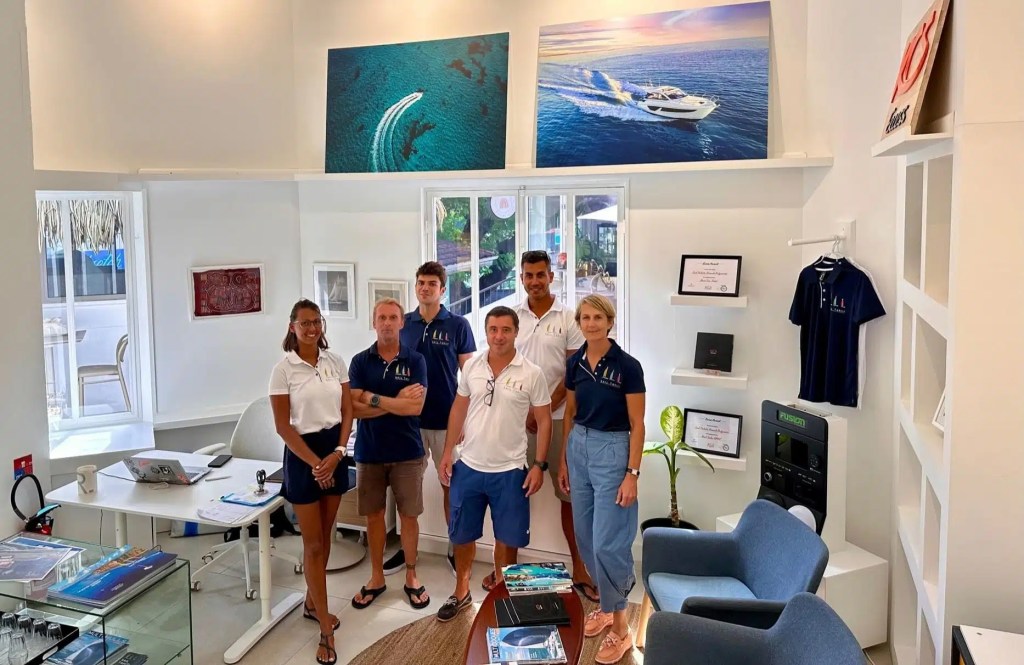
Reducing import delays and streamlining customs clearance for marine parts would shorten the time boats occupy anchorages and reduce pressure on already crowded lagoons.
2. Encourage local marine businesses to carry more stock
Many repairs are delayed because common marine components are simply unavailable locally. Incentives that help chandlers and marine businesses hold a wider range of frequently used parts would reduce waiting times while also supporting local businesses and employment.
It has been pointed out to us by some cruisers that they found everything they needed locally but this is not consistent across all boats.
3. Enforce regulations consistently
Most residents we spoke to expressed frustration not with visiting yachts themselves, but with the perception that rules are applied inconsistently.
Abandoned boats, vessels anchored in prohibited areas, and repeated environmental offences should be dealt with promptly by the appropriate authorities. Visible and consistent enforcement would reduce the frustration that can lead to some individuals to take matters into their own hands.
4. Establish dedicated lagoon rangers in areas with tensions
Rather than relying on complaints from residents or confrontations between locals and sailors, designated lagoon rangers could provide information, assist visiting yachts, monitor protected areas and enforce regulations professionally and fairly.
Their role should be educational as much as regulatory, helping visitors understand local expectations before problems arise.
5. Improve communication with visiting yachts
The Escales system is a positive initiative, but many sailors remain confused about where they may anchor, which moorings are operational and what restrictions apply.
Keeping online information accurate and up to date, together with clear signage on the water, would prevent many misunderstandings before they develop into conflict.
An effort to achieve this for the coming year has been done via the Stopover Handbook For French Polynesia 2026-27.
This publication includes maps of regulated anchoring areas at
www.service .public.pf/sdt/plaisance-responsable. However we noticed that at the time of publishing this blog the website was not operational.
Once operational, it is a significant step forward, although some requirements may prove unrealistic or difficult to follow in practice.
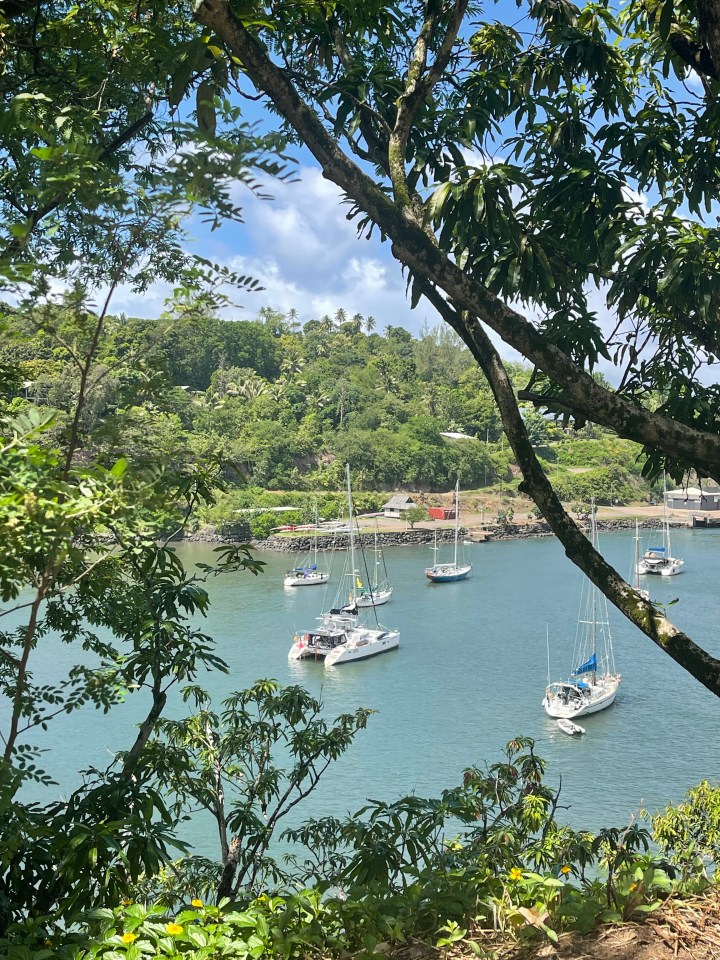
In our view, Hiva Oa and Tahuata illustrate this challenge clearly. In Atuona’s inner harbour anchorage at Tahauku Bay, where yachts must anchor to check in with the local gendarmerie, the planned limit from next year onwards is 15 vessels, with stays permitted for up to 20 days. The limit on the number of boats itself seems reasonable, as certain winds can create breaking waves in the lower part of the anchorage. Ask us how we know!
However, allowing boats to remain for up to 20 days may make it difficult for newly arriving yachts to find a safe place to anchor for check-in. If such a restriction is introduced, it should ideally be accompanied by a fully online check-in process, like the system used in the French Caribbean, so crews are not forced to leave their boats unattended when conditions make that unsafe.
Similarly, Hamoenoa Bay in Tahuata, a beautiful and sheltered anchorage, is to be limited to eight vessels for stays of up to four days. During our visit, however, at least 20 boats needed shelter there because nearby alternatives were untenable, and many were traveling with rally groups. This raises a broader question about whether the size and timing of organised rallies should be reviewed, since large groups can put intense pressure on limited services and anchorages.
6. Encourage cultural exchange
The places where we felt most welcome were those where visitors and residents naturally spent time together.
Community events, markets, family guesthouses, sports evenings and cultural activities can turn yachts from anonymous arrivals into neighbours and friends.
7. Cruisers also have responsibilities
Visiting sailors must recognise that they are guests.
Respecting local customs, buying from island businesses where possible, using designated anchorages, greeting residents, asking permission when uncertain and leaving every place cleaner than we found it are simple actions that build trust. A small tourist tax will also become compulsory on certain islands from next year, creating a more direct economic contribution from visitors.
The Stopover Handbook for French Polynesia 2026–2027 offers guidance on fishing regulations, Polynesian customs and rubbish disposal. The handbook also notes that waste management will attract a small tax on certain islands from next year. However we did notice that some of the online websites are in fact not operational or misprinted.
Ultimately, French Polynesia does not have a problem with cruising yachts so much as a management challenge: how to welcome a rapidly growing cruising community while protecting island communities, culture and extraordinary lagoons.
Catherine Chabaud, French Minister of Sea and Fishing and the first woman to complete the Vendée Globe solo, describes the ocean as a “common good of humanity.” That places responsibility for its care in all our hands. Residents, sailors and authorities need to work together to turn today’s tensions into an opportunity.
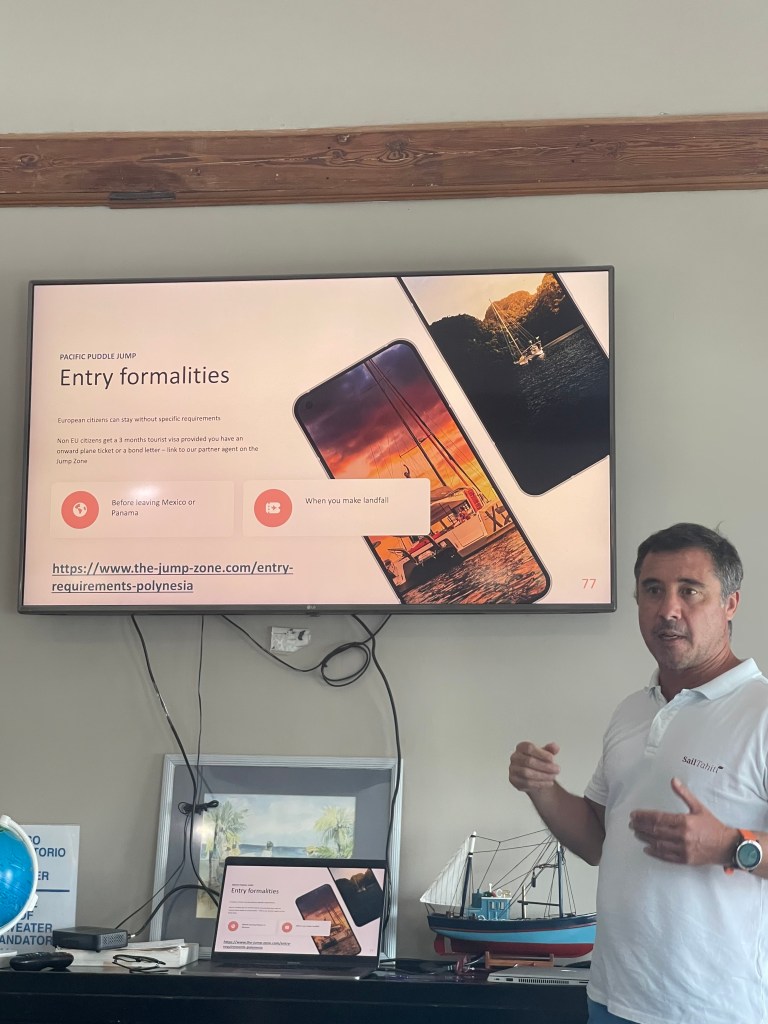
With thanks to David Allouch General Manager Sail Tahiti for his perspective and for all the free advice prior to our arrival and during our stay

